Simple-Growth
Kevin D’Ambros-Smith, business coach and advisor to SME owners

A fast route for small business owners who need their unique value proposition soon

Need your secret sauce quickly?Do the exercises in this order.

Speed doesn’t come from skipping steps. It comes from doing them in the right order and not writing the line before you have the evidence. Here is the whole route, with the minutes Kevin D’Ambros-Smith actually states, and a plain statement of what this site is and isn’t.

Book a free 30-minute call

From Kevin D’Ambros-Smith: 30+ years in business, 9 companies founded or co-founded, 200+ businesses coached one-on-one since 2017.

How long does it take to find your unique value proposition?

Kevin states three timed exercises: 5 minutes to describe your brand as a person, 10 minutes to write your unique value proposition in eight words or less, and 5 minutes for the elevator test. Customer conversations and the five-person test have no stated time, so the full run depends on how fast you can reach customers.

The story of two clocks

A pizza chain made speed its promise.Finding yours runs on a slower clock.
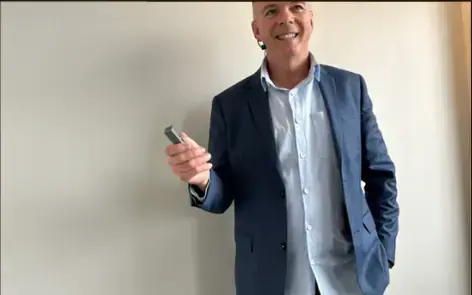
Kevin D’Ambros-Smith presenting to an audience
Kevin, on why simple takes time.

In one of Kevin’s examples, a pizza chain looked at a market where everyone could make pizza, and picked the one thing college students cared about: speed. Domino’s promised pizza in 30 minutes or free. As Kevin tells it, speed, not ingredients or quality, was the unique value. Or in his words, “Everyone can make pizza, and they came up with this amazing offer to appeal to the college students”.

Another is Zara, which goes from runway to consumer in under a week by producing locally in Spain and shipping to Europe within a week. Kevin’s comment: “And it’s so hard to compete with that.”

Notice what those clocks measure: how fast the customer gets the thing. They say nothing about how fast the owner found the idea. Finding yours runs on a different clock, and Kevin is straight about it:

“Making it simple is time consuming.”Kevin D’Ambros-Smith, Find Your Secret Sauce

He also has a dry way of putting it: “if you don’t have time to make it simple, make it complicated.” So the honest meaning of fast here is fewer detours, not fewer steps. You will know what to do, in what order, how long Kevin says each exercise takes, and where a timer cannot help because you are waiting on real customers.


“if you truly rush people, don’t expect the best idea and don’t expect the cheapest price.”Kevin D’Ambros-Smith, Crafting Your Story, on speed, quality and price: pick any two.

The speed vocabulary you have already heard

Every overnight-success promise you have ever scrolled past.

If you are short on time, the internet is delighted to help. You have seen these slogans on banners, thumbnails and countdown timers. Nobody here is promising any of them. Here is what a sensible owner hears.

Cartoon of an owner on an office chair with a rocket strapped to it, papers flying, holding a stopwatch
Fast, but where to?
OVERNIGHT SUCCESS!!!
Buyer hearsOvernight, after how many years of effort?
10X IN 10 DAYS
Buyer hearsTen times what? Measured by whom?
Hack your way to the top.
Buyer hearsI am going to be asked for my email address.
Instant results.
Buyer hearsInstant disappointment, then.
ZERO EFFORT REQUIRED
Buyer hearsSo who is doing the work, exactly?
Secret shortcut revealed!
Buyer hearsIt will be a webinar.

Speed is not the problem. Speed in the wrong direction is.So what does fast actually look like for a small business owner?

Where the hours go

Three things that make this slower than it needs to be

None of these is a lack of talent. They are the usual detours, and each one is avoidable.

1. You start with the line

Writing the tagline first feels fast. Kevin’s route does it last: the unique value proposition comes after your story, the customer evidence and your differences. Without them, you are rewriting a guess.

2. You throw six balls

Kevin: “if you throw someone one ball, they’ll probably catch it. If you throw them six balls, they’ll drop all six.” A line that lists everything you do gets dropped. The time saved is in choosing one.

3. You skip the people

The last exercise is asking five people who fit your dream customer. Skipping it feels faster, but it moves the discovery to after you have spent money on the line. Kevin notes that asking for help starts the sales process.

“you’ve got to try and make every dollar work like $100”Kevin D’Ambros-Smith, Find Your Secret Sauce. A clear line is how every dollar you spend afterwards earns its keep.

Three scenes you might know

Fast is fine.Fast and wrong is the expensive version.

Three made-up but familiar moments from owners in a hurry. If one made you wince, that is normal: most of us have been the hare at least once.

Scene 1 · Friday, 11 amCartoon of a racing hare in sneakers with a stopwatch on a winding road beside a steady tortoise with a briefcase heading for a green finish ribbon

The hare who wrote the line before lunch

There is a launch coming, a campaign deadline and a feeling that a sharper line would fix everything. So you open a blank page and write one, fast, before the afternoon meeting.

It sounds good. It sounds like every other line in your category, because it was written from your head instead of from what your customers said.

Meanwhile, somebody steady with a briefcase, who simply asked a few customers a few questions, is plodding past with a better answer.

Illustrative scene, not a client story.

Scene 2 · The first reactionCartoon of a customer with folded arms and a blank thought bubble

The customer who shrugs

You show your new line to a customer. They are polite. They nod. Their face says nothing, and the thought bubble above their head is quite empty.

Nobody was rude. The line just did not mean anything to them, because it was never tested on anyone who looks like them.

Quick, it turns out, does not mean skipping the people. In Kevin’s method the last step is asking five of them.

Illustrative scene, not a client story.

Scene 3 · What changesCartoon of a focused owner at a tidy desk with a red kitchen timer, an open notebook, a phone lying face down and a cup of tea

The afternoon with the phone face down

Same owner, same deadline. This time the calendar is cleared, the phone is face down, there is a timer on the desk and the exercises are in the right order.

Not a miracle. Just no detours: brand as a person, reasons to believe, customer insight, the line, the elevator test, then five people.

When the timer rings you are not finished, and that is fine. You know exactly what is next, and you are not guessing.

Illustrative scene, not a client story.

The exercises in order

Your afternoon plan, built only from what Kevin states.

This is the order of the exercises in the training, with the time Kevin gives where he gives one. Where he doesn’t, the table says so rather than guess.

OrderExerciseWhat you writeTime Kevin states
1Brand as a person“If my brand were a person…”: how it speaks and acts, cheeky, serious or mysterious, what it stands for and believes, and a back story that starts “once upon a time”.5 minutes
2Reasons to believeThe proof behind your claims, such as survey results, community programs or service that delivers.Not stated
3True insights about dream customersTheir tribe, dreams and desires, plus actions to learn more: who to meet, groups to join, surveys.Not stated (needs conversations)
4Hot dog and “er” claimsYour core offer, then each competitor’s claim with a bolder “er” against it.Not stated
5Differences, quirks and “what would make you famous”No wrong answers; how you could fascinate your dream customers.4 to 10 minutes (the “famous” exercise)
6Why they choose youLife impact, your unfair advantage, brand and customer fit, and the one thing they value most.Not stated
7Define your UVPYour unique value proposition in eight words or less.10 minutes
8Elevator testWhat you do, your why and the real value to the customer, in 8 to 10 seconds.5 minutes
9Test with five peopleFive people who fit your dream customer profile.Depends on the people

The timed pieces are 5 + 10 + 5 minutes, plus 4 to 10 minutes for the “famous” exercise, so 24 to 30 minutes of timed writing in all. Everything else is untimed, and the training itself is a five-part video, so allow time to watch it. A full afternoon is a sensible block. Whether it is enough depends on how quickly you can reach customers.

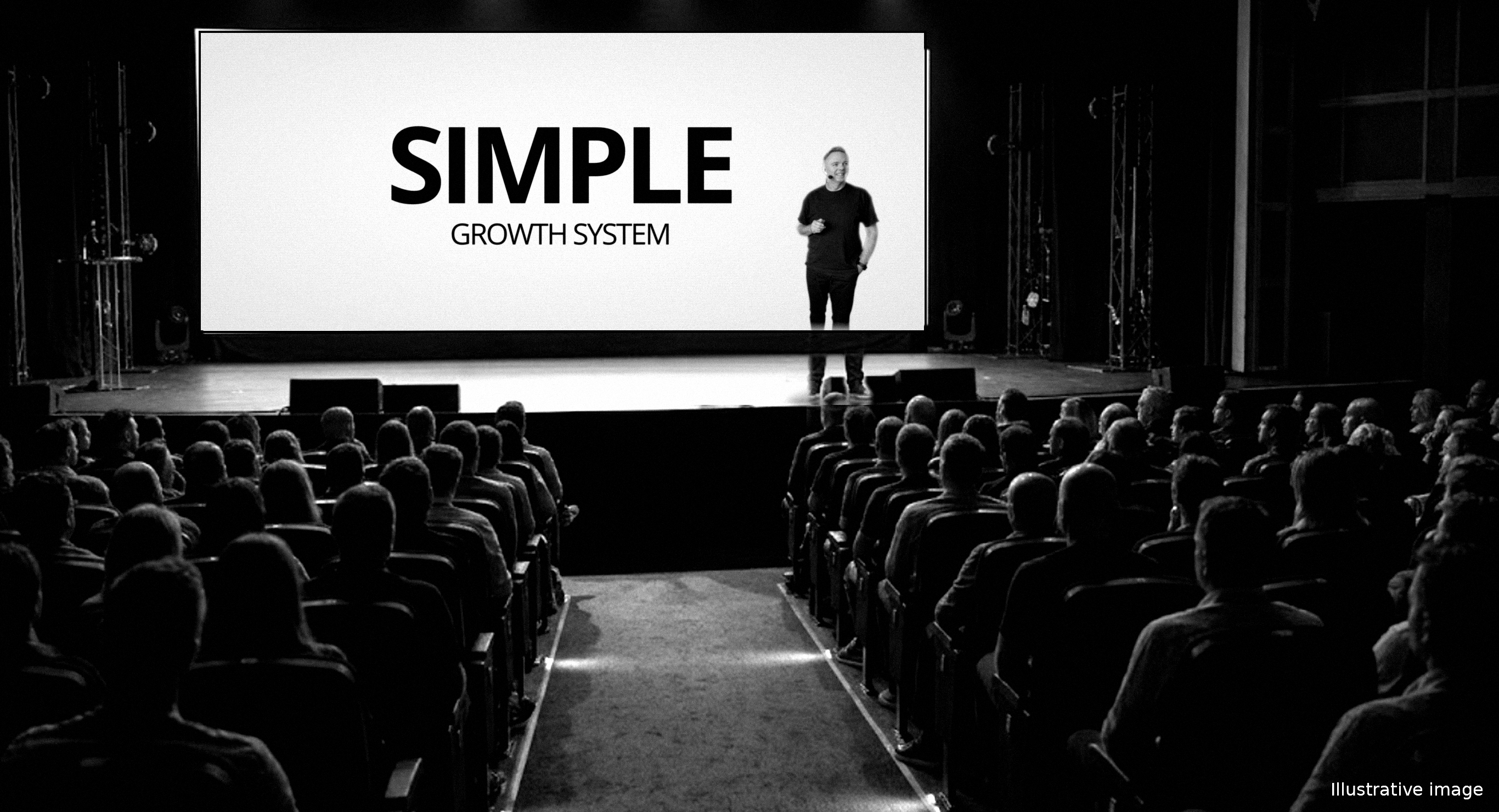
Black and white photo of Kevin D’Ambros-Smith presenting to a seated audience. Illustrative image.
The less, the stronger it is.Kevin D’Ambros-Smith, Find Your Secret Sauce
Cartoon of a focused owner at a tidy desk with a timer

The method

The Afternoon Run: Person, Proof, Point, People.

Kevin’s order, grouped into four passes so you can plan the day. The order is his. The grouping and the name are ours.

  1. Person: set the voice (5 minutes, stated)Do the “if my brand were a person” exercise, then list your reasons to believe. This keeps the line you write later sounding like you.
  2. Proof: gather the evidence (untimed)Capture what you know about your dream customers and treat what you don’t know as a to-do. Kevin’s rule: “if you hear the same thing three times from your dream customers, if you have three different dream customers tell you the same thing, you’ve got a marketing plan.” Then work through your hot dog, your “er” claims, your differences, your unfair advantage and the one thing your customer values most. None of these is timed by Kevin, which is where an afternoon can stretch.
  3. Point: write the line (10 + 5 minutes, stated)Define your UVP in eight words or less, then run the elevator test: 8 to 10 seconds, all about the recipient. “The less, the stronger it is.”
  4. People: test it on five (depends on them)Ask five people who fit your dream customer profile what they make of it. Then rewrite. Kevin: “you rewrite, rewrite, rewrite and for some reason just one way of putting those words together just sounds better than the rest”.

Worked example: the UVP model

Kevin’s UVP model has three ingredients: what makes you different, what you do well, and the unique outcomes you deliver for your dream customer. The line lives where the three overlap.

One of his clients ended up with the UVP “A better experience”. What made it believable was small and concrete: an after-hours message, and one receptionist clearing the messages at 8am. That is the pattern to copy. A short line, backed by a specific behavior a customer can see.

Then check your draft against Kevin’s four “stay on message” tests: does it have impact, is it unique, does it communicate the value delivered, and is it sustainable? For the elevator version, his example is that opening with your name bores the listener, while opening with what you enable for them, such as cars that travel twice as far on the same charge, earns attention.

Plain words

Is this a business accelerator program?No. Here is what it is.

People searching “business accelerator program” usually mean something specific, so let’s be clear about what this site is and is not.

What this is

A plain-language route through the exercises in Kevin D’Ambros-Smith’s Find Your Secret Sauce training, in his order, with the minutes he states. It is written for small business owners who want to know what makes their business different, and want to move quickly without skipping the parts that matter.

What this is not

It is not a cohort, a fixed-length program, an investment or a promise of results. No accelerator program, schedule, fee, duration or outcome is described or promised on this site.

For comparison, startup accelerators are generally described as “fixed-term, cohort-based programs, that include mentorship and educational components”, some of which invest in the startups in exchange for equity and typically run for around three months (Wikipedia: Startup accelerator, general description of the model). That is a different thing, built for early-stage startups. If you want funding or a cohort of fellow founders, look to those programs. If you want a clear answer to “why would a customer choose us?”, keep reading.

The difference in one picture

Two ways to go quickly.

Same owner, same deadline. The only thing that changes is the order of the steps.

✕Rush the line (skip to the end)

Step 1Start with the slogan, from your own head.
Step 2Polish it until it sounds clever.
Step 3Show it to customers once it is on the website.
ResultA shrug, then a rewrite, then lost time.

✓Right order (fewer detours)

Step 1Brand as a person, reasons to believe, customer insight.
Step 2Write the line in eight words or less. Rewrite it.
Step 3Run the elevator test, then ask five customers.
ResultA line you know what to do with next.

A simplified picture of the exercise order set out on this page. It shows a common pattern, not a story about a named person, and promises no timing or outcome.

Two-minute check

Are you ready for a fast run?

Seven honest questions. Your result can say that a fast run is not your best next step, and if so it points you elsewhere.

1. Do you have paying customers today?
2. Can you reach five people who fit your dream customer this week?
3. Do you know who is not your customer?
4. Who decides what your offer says?
5. Can you protect several uninterrupted hours?
6. What is your biggest problem right now?
7. What do you expect to have at the end?

Your score:

A fast run isn’t your best next step yet.

Your answers suggest something else should come first: customers to talk to, a decision on who your dream customer is, a specialist to produce the work, or help with cash flow or operations. Doing the exercises without those just produces a polished guess. If you aren’t sure what applies, a free 30-minute call will sort it, and Kevin will say if he isn’t the right person.

Book a free 30-minute call

Your score:

Nearly. Fix one thing first.

You have most of what a fast run needs. Look at which questions you scored lowest on, usually customer access or protected time, and sort that before you block the afternoon. Then the DIY route is a good fit.

See the Find Your Secret Sauce training

Your score:

You’re ready for a fast run.

You have customers, access to the people you need and a clear aim. Block the afternoon, do the exercises in order, and book your five conversations while you do. If you would like company or a challenger, the free call is there.

See the Find Your Secret Sauce training

Your options

Six ways to get clear on your difference, and how fast each one is

“Fast” has trade-offs. Here is an honest look, including startup accelerators, which are a different thing, and the cases where Kevin’s route is not the right one.

OptionBest whenWatch out for
A startup acceleratorYou are an early-stage startup looking for mentorship, a cohort of peers and sometimes investment (see the source above).A different purpose. Fixed-term and cohort-based, and some take equity. Not designed to fix an established small business’s positioning.
Kevin’s exercises in one run (this page)You are self-directed, have customers you can reach, and can write your own answers. Fastest of the options here, if the evidence is ready.No outside challenge to your answers, and it is easy to skip the hard questions. Kevin’s warning about rushing applies.
One-to-one coachingYou want challenge and accountability on your own business. Slower and deeper.Takes more of your time. Format and fees are not published here: ask on the free call.
An agency sprintYou already know what to say and need creative output fast.Output is only as good as the brief you write. You still need the positioning thinking first.
A consultantYou want a defined piece of work and can put it to use.You may get a report rather than a skill, and the pace varies.
Do nothingNever, as a plan.Kevin’s teaching treats doing nothing as a competitor. Customers still choose, just not you.

Descriptions are general guidance, not a ranking of providers. The startup accelerator description follows the general model summarized in the cited Wikipedia article and is not a statement about any particular program.

When the fast route is the wrong route

Six cases where you should not start a fast run

Speed only helps if the ingredients are there. Kevin would rather you know before you block the afternoon.

You have no customers to talk to yet

The exercises depend on real customers and the five-person test. If you haven’t launched, do the brand-as-a-person exercise and set your values, then come back once you can ask people.

You haven’t decided who your dream customer is

Do that first. Kevin’s customer training has a dream-customer profile exercise of 5 minutes, and then you need conversations.

You need the ads, site or video produced

This is positioning, not production. Kevin’s rule is to bring in creative specialists once you know what to say.

Your problem is cash flow, operations or hiring

A sharper line will not fix those. Start with the person who can.

Your edge depends on a patent or legal protection

That needs an intellectual property lawyer. Kevin’s training only says to consider IP protection.

You cannot protect the time

A fast run needs uninterrupted hours and decisions made by you. If that is not possible this month, wait.

Black and white photo of Kevin D’Ambros-Smith presenting to a seated audience. Illustrative image.
if you throw someone one ball, they’ll probably catch it.If you throw them six balls, they’ll drop all six.Kevin D’Ambros-Smith, Find Your Secret Sauce

Three free secrets

Do these first, even if you never do the full run

They are quick, they cost nothing, and they cut the most waste.

Hear it three times

“if you hear the same thing three times from your dream customers… you’ve got a marketing plan.” Three conversations beat thirty guesses.

One ball, not six

Choose the single thing that matters most to your customer and build the line around it. Kevin: “Keep it to one magic thought.”

Test it on five

Before the line goes on a site, say it to five people who fit your dream customer. It’s the cheapest test you will ever run.

The Find Your Secret Sauce training takes you through the whole sequence, with the workbook exercises, in a five-part video. If you want company or a challenger on the way, the free 30-minute call is open.

Book a free 30-minute call

Questions owners ask

Straight answers about finding your difference fast

How long does it take to find your unique selling proposition?

Kevin states three timed exercises: 5 minutes for your brand as a person, 10 minutes for your UVP in eight words or less, and 5 minutes for the elevator test. The rest is untimed and depends on how quickly you can reach customers and the five people for the final test.

Is there a business accelerator program for small businesses?

This site does not describe or offer an accelerator program, cohort, schedule or fee. “Accelerator” usually means a startup program that is fixed-term and cohort-based. What you will find here is a fast route through Kevin’s exercises, plus a free 30-minute call.

How do I write a unique value proposition in eight words?

Follow Kevin’s order: story and customer evidence first, then your differences and the one thing your customer values most. Then combine what makes you different, what you do well and the unique outcome you deliver, cut it to eight words or less (the exercise is 10 minutes), and test it on five people.

How long should an elevator pitch be for a small business?

Eight to ten seconds, not thirty, according to Kevin. It should be about the person listening, not about you, so skip your name and lead with what you enable for them. The elevator test is a 5-minute exercise.

What should I do first to stand out from competitors quickly?

Start with the 5-minute “if my brand were a person” exercise, then talk to your customers. Kevin’s rule is that if three different dream customers tell you the same thing, you have a marketing plan. Write the line after that, not before.

Can I fix my positioning before my next marketing campaign?

Yes, if you can do the exercises and test the line on five people first. Kevin’s reasoning: “Nobody counts the number of ads you run. They just remember the impression you make.” Settle the impression before you pay to repeat it.

Is there a short course to find what makes my business different?

Kevin’s Find Your Secret Sauce is a five-part video training with a workbook. It runs from your story through to a unique value proposition in eight words or less and a test on five people. It is the do-it-yourself route to the exercises described on this page.

Can I really do this in one afternoon?

You can work through the exercises in one afternoon, but the answer depends on what you already know. The timed parts add up to 24 to 30 minutes. What takes longer is reaching customers and five people for the test. Treat an afternoon as the writing block, and the conversations as the part you schedule.

Why does Kevin warn against rushing?

Because rushed work costs quality. His line is that if you truly rush people, “don’t expect the best idea and don’t expect the cheapest price.” He also says making it simple is time consuming, so a fast route is about focus, not shortcuts.

Should I do a positioning sprint if I haven’t launched yet?

Only part of it. Do the brand-as-a-person exercise and set your values before launch. The customer-tested parts, especially the five-person test, need people who might buy, so come back to them once you can ask.

Who is behind this

Kevin D’Ambros-Smith

Portrait of Kevin D’Ambros-SmithKevin D’Ambros-Smith

Kevin is a business coach and advisor to ambitious SME owners and founders in New Zealand and the USA. He is the founder of Simple-Growth and an approved Regional Business Partners Network provider in New Zealand. His practical, coalface approach comes from running businesses, not just advising them.

  • 30+ years in business, including 15 years in advertising at DDB, Ogilvy and Saatchi & Saatchi on international brands
  • 9 companies founded or co-founded, including online retail, a digital agency, healthcare logistics and a startup
  • 200+ businesses coached one-on-one since 2017, across 30+ industries
  • NPS of +72 from coaching clients surveyed through The Icehouse

Kevin’s big promise is simple: find the real constraint first, then fix it, before you spend another dollar. If a fast run isn’t the right fit, he will tell you.

Your next step

Block the afternoon.Book the call if you would like company.

The free 30-minute call helps you work out whether a fast run, one-to-one coaching or something else suits you. If you would rather work through the exercises yourself, the Find Your Secret Sauce training is the do-it-yourself route.

Book a free 30-minute call

Free, with no obligation. See the Privacy Policy.